E-Edition
Sign up for email newsletters
Sign up for email newsletters
E-Edition
Trending:
In late November, the Department of Government Efficiency (DOGE) quietly disbanded months ahead of schedule, with senior officials confirming that the agency “no longer exists” in any centralized form. Its end marks not only the collapse of a widely publicized initiative but one of the greatest missed opportunities of the Trump administration. At a moment when artificial intelligence was transforming nearly every major industry, the federal government had a rare chance to reinvent itself. Instead, it stepped backward.
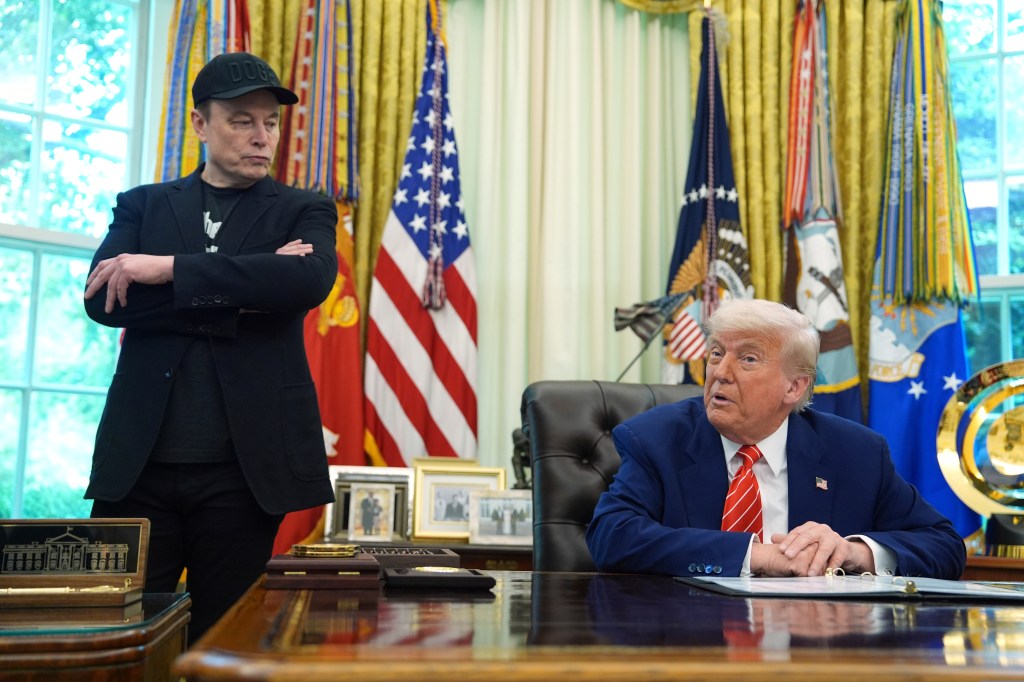
When DOGE launched in January 2025, President Donald Trump appointed Elon Musk — a global technology figure — as the program’s celebrity face. With its rhetoric of trillion-dollar savings and sweeping modernization, DOGE could have become the most ambitious public-sector innovation project in American history. Yet instead of using Musk’s technological expertise — and especially artificial intelligence — to modernize federal operations, streamline public services, and build a new digital foundation for government, DOGE quickly devolved into old-school mass layoffs and headline-friendly cuts. Estimates from McKinsey, Goldman Sachs, and the OECD suggest that 40% to 60% of all jobs could be reshaped by AI, but the administration traded a once-in-a-generation modernization opportunity for a chainsaw.
DOGE’s most dramatic action was the firing of an estimated 280,000 federal employees in a matter of months. This created the impression of sudden efficiency, but it reflected a deeper strategic failure: DOGE chose subtraction over transformation. Programs that were ripe for AI augmentation — veterans’ claims processing, Social Security workflows, IRS casework, public-health analytics, fraud detection, and regulatory review — were not redesigned or modernized. They were simply downsized, often in ways that made the remaining work slower, more expensive, and less secure. Agencies were forced to rehire many of the same workers as contractors. Anti-fraud programs that recovered more money than they cost were shut down entirely. And when DOGE abruptly ended FDA and EPA user-fee programs, Congress had to pass emergency appropriations to keep essential operations running. The most significant loss, however, was not financial — it was the opportunity to use AI to rebuild government for the next generation.
Rather than accelerating federal performance, DOGE slowed it down as agencies confronted aging systems, soaring service demands, and rapidly escalating cybersecurity threats. Entire cybersecurity teams were dismantled just as AI-powered attacks were multiplying worldwide. Public disputes between Musk and senior officials — often amplified across social media — further undermined morale and trust. The disruption was damaging, but the deeper tragedy was the transformation that never even began.
This failure is especially stark when contrasted with an earlier and far more successful modernization effort. From 1993 to 2000, Vice President Al Gore led the National Partnership for Reinventing Government (NPR), the largest and most effective government reform initiative of the modern era. NPR delivered verified, inflation-adjusted savings of roughly $300 billion, but its true success lay in how those savings were achieved. Gore’s approach was methodical rather than theatrical. NPR modernized processes, digitized operations, reduced administrative layers, strengthened customer service, and embedded reforms through bipartisan legislation such as the Government Performance and Results Act. Workforce changes were handled through attrition, early retirements, and voluntary buyouts — not mass firings — allowing reforms to be stable, sustainable, and non-polarizing. NPR built capacity. DOGE dismantled it.
DOGE could have used its mandate to invite the world’s leading AI organizations — OpenAI, DeepMind, Anthropic, Meta AI, Google Research, Microsoft AI, Amazon AWS AI, Apple AI, xAI, Mistral, Nvidia, and Cohere — to compete to solve the government’s hardest operational challenges. Such a competition could have produced multilingual digital assistants for the American public, AI copilots for federal workers, advanced fraud-detection engines capable of saving billions, AI-accelerated code modernization tools, stronger cybersecurity, and dramatically reduced backlogs across veterans’ services, Social Security, and tax processing. These tools could have been interoperable, reusable, and transferable across both the public and private sectors. DOGE could have launched the first AI-powered reinvention of the federal government — and instead, it chose elimination over innovation.
By the time DOGE dissolved, the opportunity was gone. The United States was left with a federal workforce that was not more modern, not more efficient, and in critical areas, significantly weaker. The death of DOGE is not fundamentally about missed cost savings. It is the story of a historic opportunity squandered. Modernizing government does not require chainsaws, celebrity feuds, or ideological crusades. It requires vision, collaboration, technological expertise, and respect for the institutional knowledge necessary to implement change responsibly. Above all, it requires a commitment to building.
Had DOGE embraced an AI-first strategy, the United States might today be leading the world in digital governance, offering faster services, safer systems, and more transparent operations. Instead, DOGE stands as a cautionary tale — a reminder that spectacular claims are no substitute for serious reform. As policymakers consider the next chapter of government modernization, they would do well to study Al Gore’s quiet, durable NPR — and imagine what might be possible if today’s most advanced AI labs were finally invited to help build the future of American government.
Ed Gaskin is Executive Director of Greater Grove Hall Main Streets and founder of Sunday Celebrations
Copyright © 2025 MediaNews Group
source











No Comments