


For Prelims: Periodic Labour Force Survey (PLFS), Mahila Kisan Sashaktikaran Pariyojana, Kisan Credit Cards, Tea, Coffee, Gram Panchayats, Cooperatives, Farmer Producer Organizations, BHASHINI, Digital Sakhi, e-NAM.
For Mains: Status of Feminisation of Indian Agriculture, Challenges in Women’s Agricultural Empowerment, Systemic Barriers to Women’s Progress, Government Initiatives for Women Farmers, Strategies for Future Empowerment.
Source: TH
As per the Periodic Labour Force Survey (PLFS) 2023-24, women’s participation in agriculture has increased significantly, however, nearly half of them continue to remain unpaid, reflecting deep-rooted gender disparities in farm employment.
Mnemonic: WOMEN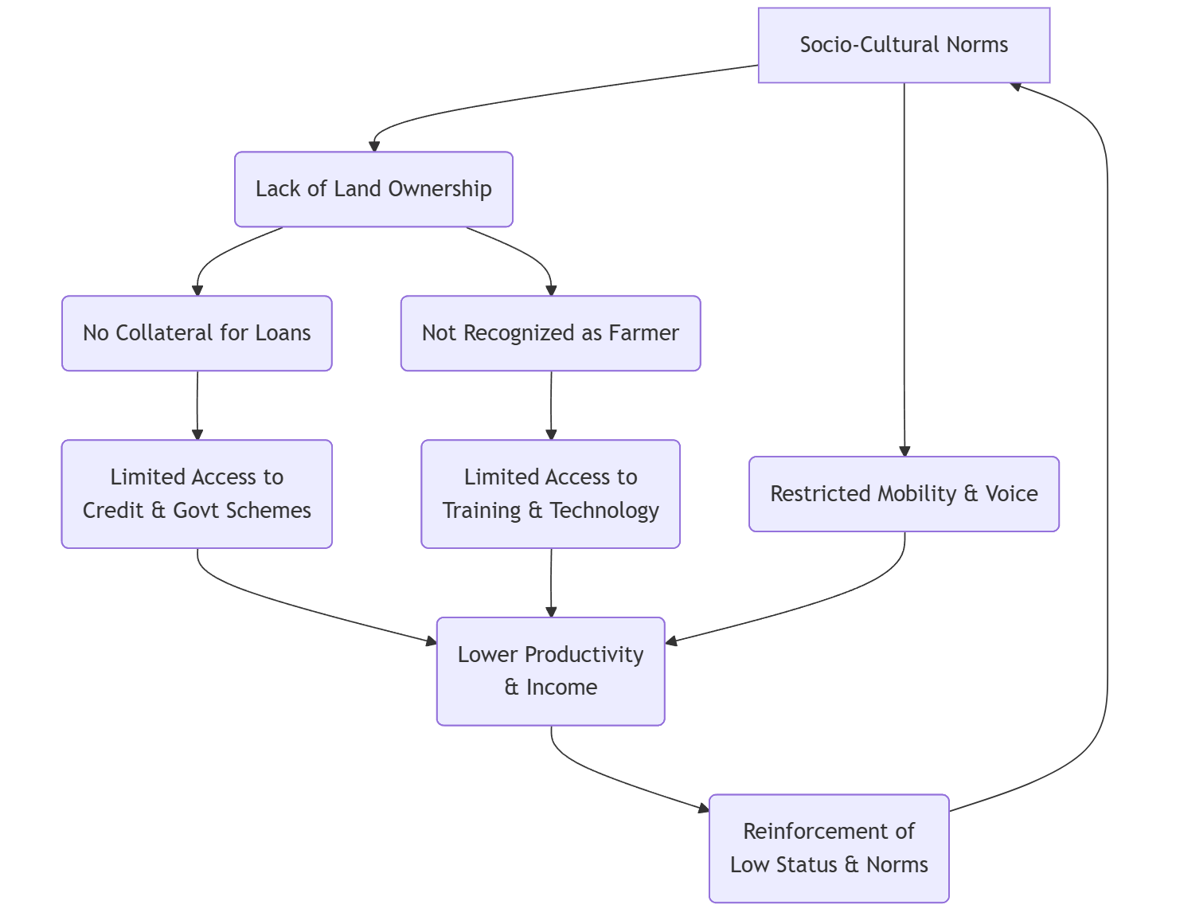
Mnemonic: GROW
To harness the potential of feminising agriculture, India must transition from recognizing women’s labor to empowering them as economic agents. This requires dismantling systemic barriers like land rights denial and wage gaps, while actively promoting their access to technology, markets, and decision-making roles for inclusive growth.
Drishti Mains Question:
Q. “The feminisation of agriculture in India has reinforced existing inequities rather than empowering women.” Critically examine this statement and suggest measures for a gender-inclusive agricultural growth model.
1. What is Feminisation of Agriculture?
Ans: The feminisation of agriculture refers to the increasing participation of women in agricultural labor due to the migration of men to non-farm jobs.
2. What is the current share of women in India’s agricultural workforce?
Ans: Women now constitute over 42% of India’s agricultural workforce, marking a 135% increase in the past decade.
3. Which factors are driving the feminisation of agriculture in India?
Ans: Male out-migration, growth of contract farming, patriarchal norms, and limited non-farm opportunities for women are key drivers.
Q. With reference to the circumstances in Indian agriculture, the concept of “Conservation Agriculture” assumes significance. Which of the following fall under the Conservation Agriculture? (2018)
Select the correct answer using the code given below:
(a) 1, 3 and 4
(b) 2, 3, 4 and 5
(c) 2, 4 and 5
(d) 1, 2, 3 and 5
Ans: (c)
Q. Discuss the various economic and socio-cultural forces that are driving increasing feminization of agriculture in India. (2014)
More Links
Archives by Date
Archives by Month & Year
What’s New





No Comments