
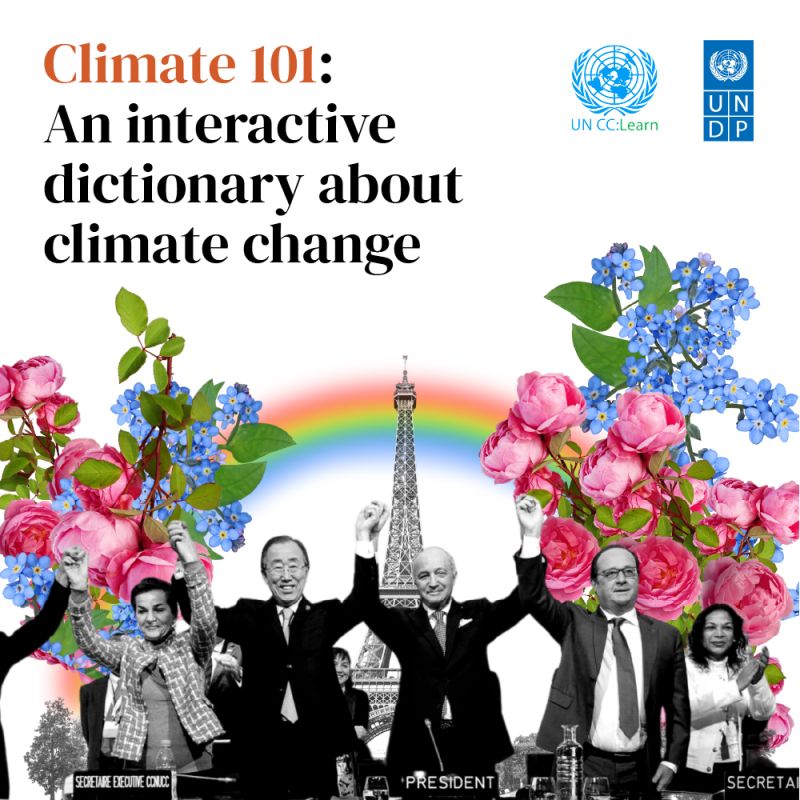
Climate 101: An Interactive Dictionary about Climate Change is a free global learning opportunity developed by UN CC:Learn in collaboration with the United Nations Development Programme (UNDP) to help learners clearly understand key climate change concepts in an accessible and engaging way.
Climate change remains one of the most complex global challenges of our time, and understanding the language used in climate negotiations, policies, and media is essential for meaningful engagement.
Climate 101 is designed to break down complex climate terminology into simple, everyday explanations, making climate knowledge more inclusive and easier to navigate for learners at all levels. By combining definitions with interactive exercises, examples, and games, this learning opportunity supports individuals who want to confidently participate in climate-related discussions, policymaking, education, and advocacy.
What Is Climate 101?
Climate 101 is an interactive digital learning resource inspired by the UNDP Climate Dictionary. It serves as a practical guide to climate change terminology commonly used in international negotiations, national climate policies, academic research, and media reporting.
From concepts like greenhouse gas emissions and global warming to more advanced terms such as carbon markets, loss and damage, and just transition, Climate 101 explains climate language in a way that is easy to understand without oversimplifying critical ideas.
The initiative was developed by UN CC:Learn, a United Nations partnership that supports countries in designing and implementing climate change learning strategies, in collaboration with UNDP Climate Promise, which assists countries in achieving their climate commitments under the Paris Agreement.
Who Can Use Climate 101?
Climate 101 is open to learners worldwide and does not restrict access based on nationality, age, academic background, or professional status. It is designed for a wide range of users, including but not limited to:
-
Students seeking to understand climate change terminology
-
Journalists and media professionals covering climate issues
-
Policymakers and government officials engaging in climate negotiations
-
Climate activists and civil society organizations
-
Educators and researchers
-
Members of the general public interested in climate action
There are no formal education requirements, and no prior knowledge of climate science or policy is required to benefit from this learning opportunity.
Program Details: What Climate 101 Offers
Climate 101 is a self-paced, fully online learning experience that allows participants to explore climate concepts at their own convenience. The program focuses on clarity, accessibility, and interaction rather than technical complexity.
Key Learning Areas Covered
The interactive dictionary covers 27 essential climate-related terms, including:
-
Weather vs. Climate
-
Greenhouse gas emissions
-
Global warming vs. Climate change
-
Climate crisis
-
Carbon footprint
-
COP (Conference of the Parties)
-
Paris Agreement and Nationally Determined Contributions (NDCs)
-
Mitigation and adaptation
-
Net zero and long-term strategies
-
Climate finance
-
Decarbonization
-
Just transition
-
Renewable energy
-
Circular economy
-
Green jobs
-
Nature-based solutions
-
Reforestation vs. Afforestation
-
Carbon markets
-
Regenerative agriculture
-
Rewilding
-
Climate justice
-
Indigenous knowledge
-
Climate security
-
Resilience
-
Loss and damage
-
Greenwashing
Each topic is presented using clear definitions, real-world examples, and practical explanations that connect global climate concepts to everyday realities.
Learning Structure and Format
Climate 101 uses an interactive learning approach, which includes:
-
Short explanations written in plain language
-
Quizzes to test understanding
-
Drag-and-drop activities
-
Crosswords and recap exercises
-
Knowledge checks throughout the course
This structure helps learners retain information while staying engaged. The interactive design makes Climate 101 suitable for both independent learners and group-based learning environments such as classrooms or workshops.
Duration, Fees, and Certification
-
Duration: Self-paced (no fixed timeline)
-
Location: Fully online
-
Cost: Free of charge
-
Certification: No formal certificate is specified
Participants can start, pause, and resume learning at any time, making it suitable for learners with busy schedules.
How to Access Climate 101
There is no formal application process required to access Climate 101. Learners can begin immediately by visiting the official platform. No registration or payment is required to explore the interactive dictionary.
Important Notes and Disclaimers
Climate 101 includes references and links to third-party websites for learning purposes. The United Nations notes that these external links are provided for convenience only and do not constitute endorsement. Responsibility for external content lies with the respective publishers.
Why Climate 101 Matters
As climate discussions increasingly influence economic planning, governance, security, and development, understanding climate terminology is no longer optional. Climate 101 empowers learners with the language needed to engage confidently in climate conversations at local, national, and international levels.
By making climate knowledge accessible, this learning opportunity supports informed decision-making, stronger advocacy, and more inclusive participation in global climate action.
Climate 101: An Interactive Dictionary about Climate Change is a valuable free UN learning opportunity for anyone seeking to understand the language shaping global climate action. Developed by UN CC:Learn and UNDP, it offers an engaging, interactive, and accessible way to explore essential climate concepts without barriers.
Whether you are new to climate discussions or looking to strengthen your understanding of climate terminology, Climate 101 provides a reliable and practical foundation.
Access Climate 101 Here
For more opportunities visit opportunities for youth