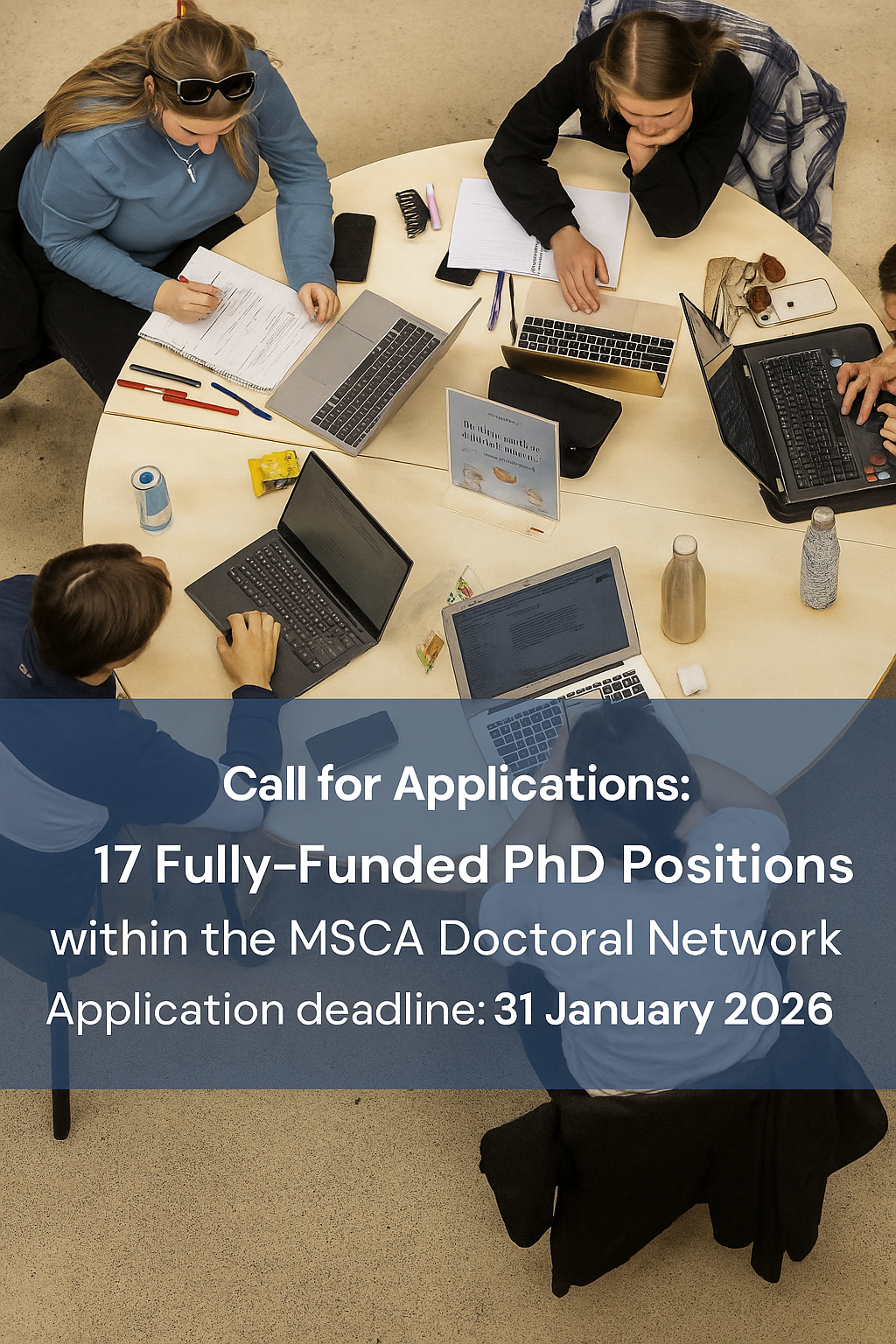
Lund University, in collaboration with a consortium of fourteen leading higher-education institutions from Europe and Canada, today announces the recruitment of 17 fully funded doctoral candidates for the Marie Skłodowska-Curie Actions Doctoral Network (MSCA DN) project titled Sociology of Authoritarian Law: Insights from Central Asia (SOCIAL). This four-year doctoral training programme is scheduled to commence in September 2026 and aims to offer an interdisciplinary, international platform for doctoral research into law, governance and society in authoritarian settings.
Project Rationale
Authoritarian governance presents complex challenges to established legal, institutional and societal frameworks. This Doctoral Network addresses one of the most pressing research frontiers in socio-legal studies: how legal systems, normative orders and governance structures evolve, adapt and persist within authoritarian environments. With a geographic focus on Central Asia, the SOCIAL network will generate novel empirical and theoretical contributions concerning law-society–governance dynamics, while training a new generation of scholars capable of bridging academic research and policy practice.
Consortium and Institutional Framework
The SOCIAL network is coordinated by the Department of Sociology of Law at Lund University and includes 14 partner organisations across Sweden, the United Kingdom, Germany, the Netherlands, Latvia, Estonia, Lithuania, Switzerland, Turkey and Canada. The participating institutions represent world-class centres in law, sociology, political science and related fields. Together, they commit to offering doctoral candidates a structured programme of research training, international mobility, inter-sectoral secondments and joint supervision.
Programme Objectives
The SOCIAL Doctoral Network pursues three primary objectives:
- Empirical and theoretical innovation – to advance knowledge about how authoritarian legal orders function, adapt and interact with global legal norms and frameworks.
- Interdisciplinary doctoral training – to develop scholars equipped with advanced research methods and transferable skills, able to operate across disciplinary boundaries.
- Policy outreach and knowledge transfer – to ensure that research outcomes are translated into actionable intelligence for governance, civil society and international stakeholders.
Training Model and Candidate Responsibilities
Each of the 17 doctoral candidates will be hosted by one of the consortium institutions and work under the joint supervision of at least two scholars from different partner institutions. The training model includes:
- Two mandated secondments (one academic, one non-academic) of between two and six months each.
- Fieldwork and research activities in Central Asia as an integral component of each project.
- A comprehensive training curriculum covering research methods, ethics, Open Science practices, transferable skills, and thematic seminars on law, governance and corruption.
- Mobility and collaboration across consortium institutions, international conferences, network workshops and peer-review publication opportunities.
Eligibility Criteria
Applicants must satisfy the following criteria, in accordance with MSCA conditions:
- Possess a Master’s degree (or equivalent) entitling them to commence doctoral studies in the country of recruitment.
- Have not been awarded a doctoral degree at the time of recruitment.
- Have a maximum of four years’ full-time equivalent research experience after their Master’s degree by the recruitment date.
- Must not have resided or undertaken their principal activity (work, studies, etc.) in the host country for more than 12 months during the 36 months immediately prior to recruitment (MSCA mobility rule).
- Demonstrate strong command of English; hold relevant disciplinary background (law, sociology, political science, economics, development studies, anthropology, human rights or related fields); show motivation for inter-disciplinary research and fieldwork in Central Asia.
Employment and Benefits
Successful candidates will be appointed under a full-time, fixed-term employment contract (typically 36 months) funded through the MSCA programme. The contract provides a competitive monthly living allowance, mobility allowance and, where applicable, family allowance, in line with MSCA regulations. Candidates will benefit from full social security coverage, access to the international consortium network, structured training and career development support.
Doctoral Project Descriptions
A broad overview of the doctoral projects is provided below:
PhD Position Details
DC1 – Authoritarian Legal Harmonization
- Host: Södertörn University (Sweden)
- Focus: Explore how international frameworks shape legal harmonization in authoritarian regimes.
- Description: This DC project investigates how legal norms are diffused and harmonized across authoritarian regimes in Central Asia. It focuses on the growing influence of regional organizations like the Shanghai Cooperation Organization (SCO), Eurasian Economic Union (EAEC), and the Commonwealth of Independent States (CIS) in shaping legal convergence through non-democratic pathways. The doctoral candidate will explore how these regional actors challenge Western liberal-democratic legal norms, contributing to a contested and evolving legal landscape in the region. The project aims to highlight the tensions between authoritarian legal models and Western governance agendas.
Application details and procedures can be found here: https://www.sh.se/english/sodertorn-university/meet-sodertorn-university/this-is-sodertorn-university/vacant-positions
DC2 – Myths vs Realities in Legal Reforms
- Host: University of Birmingham (UK)
- Focus: Contrast public reform narratives with actual legal outcomes under authoritarian elites.
- Description: This DC project examines the contradictory nature of legal reforms in Central Asia. Some reforms aim to entrench authoritarian rule through constitutional engineering, while others introduce mechanisms aligned with international standards—such as administrative courts and accountability structures. The PhD candidate will analyze these dual-track reforms, assessing how they are perceived by citizens, how they are enforced by institutions, and evaluating their implications for governance and rule of law.
Application details and procedures can be found here: https://edzz.fa.em3.oraclecloud.com/hcmUI/CandidateExperience/en/sites/CX_6001/job/8258/?utm_medium=jobshare&utm_source=External+Job+Share
DC3 – Corporate Transparency & Corruption
- Host: University of Toronto (Canada)
- Focus: Link corporate disclosure norms to patterns of grand corruption.
- Description: This DC project explores the relationship between corporate disclosure, transparency, and grand corruption in Central Asia. It examines how legal frameworks and institutional practices shape corporate accountability, and how transparency norms are interpreted or subverted under authoritarian governance. The research will generate a comparative database and case studies, analyzing how companies and regulators navigate disclosure obligations in environments marked by systemic corruption.
Application details and procedures can be found here (please click on “Doctoral student opportunity”): https://www.crimsl.utoronto.ca/people/directories/all-faculty/matthew-light
DC4 – Politics of Anti-Corruption
- Host: Turiba University (Latvia)
- Focus: Examine local adoption and manipulation of international anti-corruption standards.
- Description: This DC project investigates how international anti-corruption frameworks are interpreted and applied in Central Asia’s authoritarian legal systems. The research will unpack how global norms—rooted in Western legal traditions—are adapted, contested, or resisted by domestic institutions shaped by collectivist values and legal nihilism. The doctoral candidate will engage in fieldwork examining the implementation and local meaning of anti-corruption practices and agencies.
Application details and procedures can be found here:
https://www.turiba.lv/en/news/phd-position-in-sociology-of-authoritarian-law-politics-of-anti-corruption
DC5 – Corruption in Public Procurement
- Host: Marmara University (Turkey)
- Focus: Identify informal procurement practices in national and donor-funded contracts.
- Description: Focusing on corruption in public procurement processes in Central Asia, this DC project investigates the gaps and tensions between national and international compliance cultures. It will analyze how informal practices intersect with official procurement policies, particularly those tied to international financial institutions. The candidate will study case examples including pandemic-related procurement to identify vulnerabilities and policy reform opportunities.
Application details and procedures can be found here:
https://econ-ikf.marmara.edu.tr/en/notice/phd-position-announcement-under-the-social-doctoral-network-marie-sklodowska-curie-actions
DC6 – Executive By-Laws & Authoritarian Governance in Central Asia
- Host: Lund University (Sweden)
- Focus: Analyze how decrees and by-laws centralize authoritarian power.
- Description: This DC project explores how by-laws and normative acts—often beyond the scope of parliamentary oversight—are used in authoritarian regimes to regulate public life. The research will investigate legal fragmentation, governance mechanisms, and informal hierarchies within Central Asia’s legal systems.
Application details and procedures can be found here: https://lu.varbi.com/en/what:job/jobID:870095/
DC7 – Traditional Courts & State Law
- Host: Leibniz-Zentrum Moderner Orient (Germany)
- Focus: Study interactions between aksakal and formal court systems.
- Description: This DC project examines the interaction between traditional courts (e.g., aksakal) and state legal systems in Central Asia, past or present. The project will assess the political use of jurisdictional pluralism and explore how informal justice mechanisms operate in contested or hybrid legal environments.
Application details and procedures can be found here:
https://www.zmo.de/fileadmin/Karriere/Ausschreibungen_2025/CALL_FOR_APPLICATIONS_SOCIAL_SK_EN_FIN.pdf
DC8 – Political Connections & Access to Economic Resources
- Host: University of the West of England (UK)
- Focus: Trace how networks and corruption influence access to scarce economic resources.
- Description: Investigating how corruption and political networks influence access to scarce economic resources (e.g. bank credit) in authoritarian economies, this DC project will use fieldwork and survey methods to analyze stakeholder experiences, institutional practices, and the fairness and efficiency of resource allocation in key economic sectors.
Application details and procedures can be found here: Doctoral Researcher
DC9 – Administrative Law & Regime Legitimacy
- Host: Malmö University (Sweden)
- Focus: Investigate administrative law reforms as instruments of authoritarian legitimacy.
- Description: This DC project studies administrative law reform as a mechanism of authoritarian legitimation. It will examine the role of legal frameworks, judicial practices, and institutional cultures in shaping public perceptions of legal accountability and legitimacy in Central Asia.
Application details and procedures can be found here:
https://web103.reachmee.com/ext/I005/1015/job?site=7&lang=UK&validator=e5819a4704cd849685049472c0c17895&job_id=4243
DC10 – Anti-Money Laundering Compliance in Authoritarian States
- Host: Estonian Business School (Estonia)
- Focus: Assess anti‑money‑laundering frameworks and enforcement pathways.
- Description: This DC project focuses on anti-money laundering (AML) frameworks in Central Asia. It will evaluate compliance mechanisms, enforcement levels, and the alignment of AML norms with international expectations in environments marked by political centralization and opacity.
Application details and procedures can be found here:
https://info.ebs.ee/hubfs/EBS%20Project%20based%20PhD%20Call%20Deadline%2031.01.26.pdf?hsLang=en
DC11 – Security Narratives & Legal Change
- Host: University of Birmingham (UK)
- Focus: Study how securitization drives constitutional/legal reforms.
- Description: This DC project explores how security discourses—such as counterterrorism and digital surveillance—drive constitutional and legal reforms in authoritarian regimes. The research will study how law is instrumentalized to expand executive power and suppress dissent.
Application details and procedures can be found here:
https://edzz.fa.em3.oraclecloud.com/hcmUI/CandidateExperience/en/sites/CX_6001/job/8239/?utm_medium=jobshare&utm_source=External+Job+Share
DC12 – “Outside the Law” Legal Mobilization in Central Asia
- Host: Lund University (Sweden)
- Focus: Examine how civil society actors use non-state means to claim rights and justice.
- Description: This DC project analyzes how individuals and communities mobilize for rights and justice through non-state and extra-institutional channels. It will focus on local activism, digital advocacy, and informal justice initiatives in authoritarian contexts.
Application details and procedures can be found here: https://lu.varbi.com/en/what:job/jobID:869875/
DC13 – Legal Pluralism & Anti-Corruption
- Host: University of Groningen (Netherlands)
- Focus: Understand dynamics across plural legal systems in corruption control.
- Description: This DC project investigates how actors navigate competing legal systems to combat corruption in Central Asia. The project will assess whether legal pluralism enhances or obstructs anti-corruption effectiveness in hybrid governance settings.
Application details and procedures can be found here:
https://werkenbij.rug.nl/vacature/phd-candidate-legal-pluralism-and-corruption-in-central-asia-1321/?lang=en
DC14 – Legal Nihilism & Distrust
- Host: Charles University Prague (Czechia)
- Focus: Probe causes and consequences of societal mistrust in formal law.
- Description: This DC project examines why legal nihilism persists in post-socialist authoritarian societies. It will explore public perceptions of law, informal legal practices, and how legal mistrust affects social order and compliance.
Application details and procedures can be found here: https://euraxess.ec.europa.eu/jobs/386400
DC15 – Legal Education Reform
- Host: Vilnius University, Institute of International Relations and Political Science (Lithuania)
- Focus: Critique post-socialist legal education and promote critical/sociological approaches.
- Description: This DC project focuses on legal education in Central Asia, investigating its role in promoting critical thinking and socio-legal inquiry. The candidate will analyse the nature and forms of legal education in the context of authoritarian regimes assessing curricula, pedagogy, and institutional resistance to reform.
Application details and procedures can be found here: https://www.tspmi.vu.lt/en/projektas/sociology-of-authoritarian-law-insights-from-central-asia-social/
https://is.vu.lt/pls/dokt/isas.login?p_kalba=en
DC16 – Rural Governance in Central Asia
- Host: University of Zurich (Switzerland)
- Focus: Explore local democracy, governance, and rural political cultures.
- Description: This DC project will explore local governance practices and democratization from a bottom-up perspective in Kazakhstan. It will use ethnographic fieldwork to investigate how villagers engage with and resist formal political structures.
Application details and procedures can be found here:
https://jobs.uzh.ch/job-vacancies/2-phd-positions-within-the-horizons-project-social-sociology-of-authoritarian-law-insights-from-central-asia/a0f0c310-8719-4a21-8b79-dfe2559cd777
DC17 – Governance in Mongolia
- Host: University of Zurich (Switzerland)
- Focus: Study post‑socialist local political transformations in Mongolia.
- Description: This DC project investigates local democratic practices in Mongolia, focusing on evolving governance models in rural and peri-urban areas. It will study civic participation, traditional authority, and institutional adaptation.
Application details and procedures can be found here:
https://jobs.uzh.ch/job-vacancies/2-phd-positions-within-the-horizons-project-social-sociology-of-authoritarian-law-insights-from-central-asia/a0f0c310-8719-4a21-8b79-dfe2559cd777
Who Should Apply?
- Hold a Master’s in law, political science, , economics, development studies, sociology, human rights, anthropology, or related fields
- Hold no PhD at recruitment
- MSCA mobility rule applies: unspent >12 months in host country during previous 36 months
- Have strong research and language (English) abilities, and motivation to engage in interdisciplinary research and policy outreach
What We Offer
- 36‑month full-time EU MSCA employment contract (note that the duration of employment may vary depending on the host institution)
- Competitive monthly living, mobility, and family allowances
- Joint supervision and inter‑sectoral placements
- Comprehensive training: methods, ethics, Open Science, transferable skills
- Career guidance and enhanced employability
Application Procedure
Applicants should consult the relevant recruitment link for each doctoral position to obtain full instructions. Generally, a complete application comprises:
- A cover letter explaining motivation and fit with the project;
- A research proposal (recommended 2–3 pages) aligned with the thematic project description;
- Curriculum vitae detailing academic and employment history;
- Degree certificates and academic transcripts;
- Two academic referees with full contact information;
- A writing sample (e.g., a published article, Master’s thesis chapter, working paper).
All documents are to be submitted as a single PDF file via the host institution’s online portal by the deadline of 31 January 2026.
For further information regarding the SOCIAL Doctoral Network and application queries please contact:
Dr Rustamjon Urinboyev
Coordinator, SOCIAL-DN
Department of Sociology of Law, Lund University
E-mail: rustamjon.urinboyev@soclaw.lu.se
About Lund University
Lund University, founded in 1666, is one of Scandinavia’s oldest and most distinguished research institutions. With 46 000 students and 8 600 staff, the University is based across Lund, Malmö, Helsingborg and Ljungbyhed, and maintains a reputation for excellent international research.
As coordinating institution for the SOCIAL network, the Department of Sociology of Law continues its commitment to advancing high-quality socio-legal scholarship and engaging with contemporary questions of governance, law and society.
For more opportunities, visit:opportunitiesforwomen.org/








Comments are off for this post.