In an era marked by rapid technological advancement, political polarization, and widening ethical dilemmas across industries, the demand for leaders who can think critically about moral responsibility has never been greater. Professionals in fields as diverse as medicine, journalism, business, law, technology, and religious leadership are confronted with difficult decisions every day—decisions that shape institutions, communities, and even societies at large.
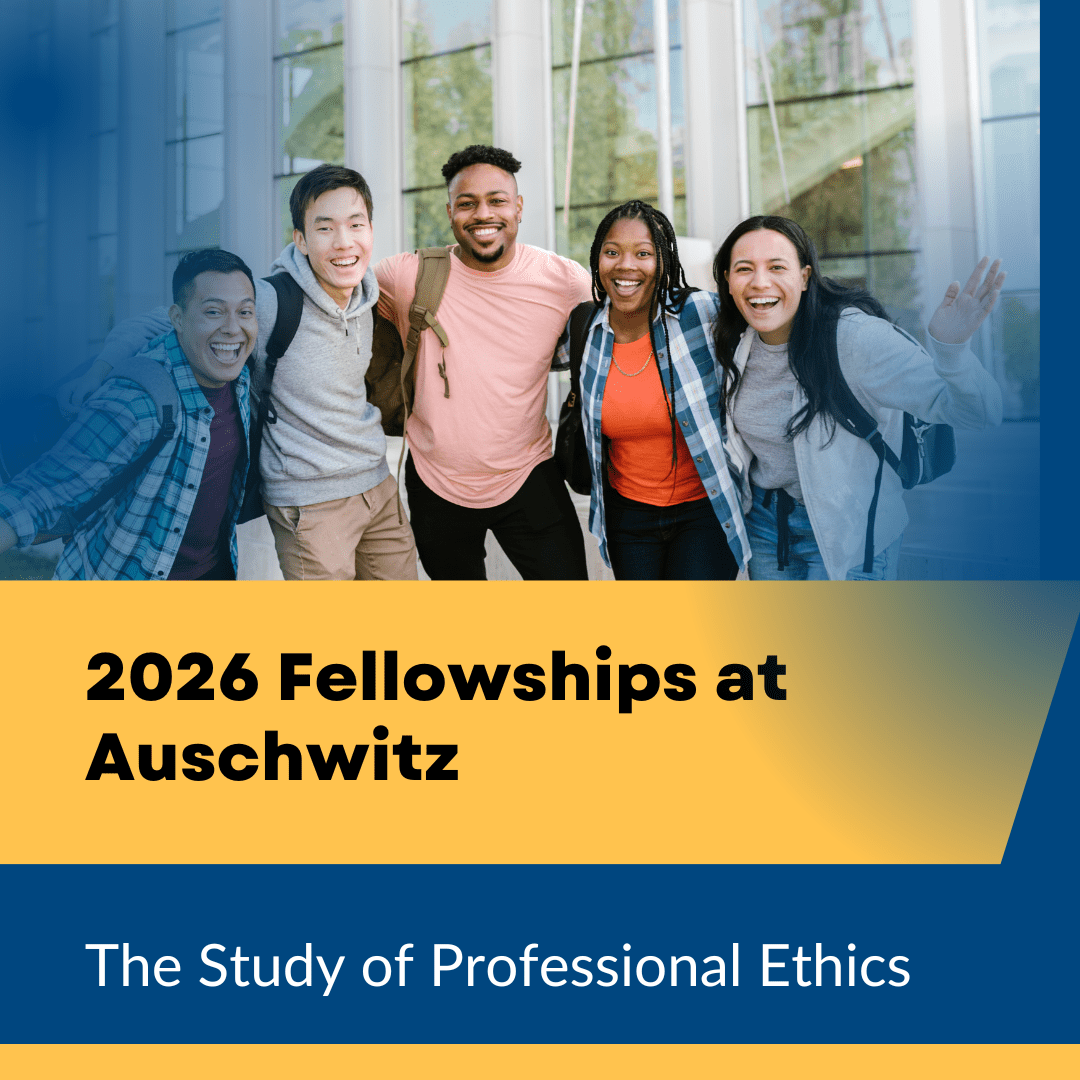
The Fellowships at Auschwitz for the Study of Professional Ethics (FASPE) stands as one of the most distinctive and transformative opportunities for emerging leaders committed to ethical practice in their careers. Applications are now open for the 2026 FASPE Fellowship Programs, which will convene graduate students and early-career professionals for an intensive two-week study experience in Germany and Poland.
With the application deadline set for January 4, 2026, FASPE invites outstanding candidates from around the world to take part in this fully funded fellowship that explores the role of ethics in professional life, grounded in historical lessons from the Holocaust and other atrocities of the 20th century.
The FASPE Mission: Ethics Rooted in History
What sets FASPE apart from other professional development opportunities is its deeply historical lens. Rather than teaching ethics in the abstract, FASPE examines one of the most devastating failures of professional responsibility in history: the complicity of doctors, lawyers, journalists, business leaders, clergy, and other professionals in supporting and advancing Nazi policies between 1933 and 1945.
By studying how educated professionals—those entrusted with the well-being, justice, information, and spiritual guidance of society—abandoned their ethical responsibilities, Fellows gain unique insight into the importance of moral courage today.
The Holocaust was not only the result of political leadership gone awry; it was enabled and sustained by ordinary professionals who either failed to resist or actively collaborated. FASPE asks: What does that mean for us, in our professions, right now?
This grounding makes FASPE not just a fellowship, but a moral inquiry that connects the past to the present. As the program emphasizes, the goal is not to hand participants prepackaged answers, but to equip them with the intellectual and emotional tools to ask better questions—questions that challenge assumptions and sharpen ethical clarity.
Why Professional Ethics Matter Today
The urgency of professional ethics is clear when we examine the challenges of our own time:
- In business, companies grapple with issues of environmental sustainability, workplace equity, and the ethical deployment of artificial intelligence.
- In law, practitioners face questions of justice amid rising authoritarian tendencies and debates over human rights.
- In medicine, professionals confront dilemmas surrounding patient care, public health, and access to treatment.
- In journalism, reporters and editors are tasked with preserving truth in an era of misinformation and distrust of the media.
- In technology and design, innovators wrestle with the implications of surveillance, privacy, and the human impact of new tools.
- In religious leadership, clergy must respond to ethical crises within institutions while guiding diverse communities in times of moral uncertainty.
FASPE underscores that across professions, ethics is not optional. It is the foundation of public trust and professional credibility. By situating ethical reflection in real-world professional contexts, the program ensures its relevance to Fellows’ current and future work.
Applicants can begin their process online at:
FASPE Application Portal
The FASPE Experience: Two Weeks of Immersive Learning
Each FASPE fellowship begins with a two-week program of study in Europe, centered in Germany and Poland. This is not a classroom-based seminar in the traditional sense. Instead, Fellows study on site at places of historic significance—locations where ethical decisions, both courageous and catastrophic, were once made.
Seminars are led by faculty experts who guide Fellows through structured discussions of ethics in their respective fields, connecting historical case studies to present-day challenges. The “power of place” is central to the program: learning about professional failures in ethics while standing in Auschwitz or Berlin is an experience that leaves an indelible mark.
The days typically include:
- Morning seminars exploring professional ethics in depth.
- Site visits to concentration camps, memorials, museums, and institutions central to Holocaust history.
- Cross-disciplinary discussions where Fellows from different fields share perspectives and insights.
- Group reflection sessions foster dialogue about personal and professional responsibility.
This design ensures that Fellows not only learn history but also engage in active reflection about their own potential roles in preventing harm and promoting ethical leadership today.
Six Disciplines, One Common Goal
FASPE currently offers fellowship programs in six distinct fields, all of which played significant roles in Nazi-era Germany. Applicants may apply to the program most relevant to their career path:
- Business – For graduate students and early-career professionals in management, finance, entrepreneurship, or corporate leadership.
- Clergy & Religious Leadership – For divinity students, seminarians, and emerging religious leaders.
- Design & Technology – For professionals shaping the future of digital technology, product design, and innovation.
- Journalism – For journalists, editors, and media professionals committed to truth and accountability.
- Law – For law students, clerks, and early-stage legal practitioners.
- Medicine – For medical students, residents, and young practitioners in health care.
Each program follows a parallel structure but focuses on the specific ethical challenges inherent to the discipline. At the same time, interdisciplinary sessions bring all Fellows together, fostering cross-professional dialogue and collaboration.
Program Benefits: Why Apply to FASPE?
The FASPE Fellowship is more than just an academic opportunity; it is a fully immersive, professional, and personal development experience. Key benefits include:
- Fully funded participation: Travel, lodging, and meals are covered by FASPE, ensuring accessibility regardless of financial circumstances.
- Lifelong network: Fellows join an alumni community of more than 900 professionals worldwide, representing a wide range of disciplines.
- Interdisciplinary learning: By engaging with peers across different professions, Fellows broaden their understanding of how ethical questions manifest in diverse contexts.
- Continued engagement: Beyond the two-week program, FASPE offers ongoing opportunities for alumni, including annual reunions, regional meetups, symposia, and virtual events.
- Transformative personal impact: Many Fellows describe the program as a defining moment in their lives, one that permanently shifts how they approach responsibility in their careers.
As one recent Fellow, Adi Samant (2025 Business Fellow), explained:
“FASPE was one of the most powerful experiences of my life. Walking through sites where history’s most devastating ethical failures occurred, I was forced to ask hard questions about my own profession and myself. The fellowship doesn’t hand you answers; rather, it teaches you how to question. It challenges your assumptions, sharpens your moral clarity, and deepens your sense of responsibility. Thanks to the program and the incredible group of Fellows, I came back not just more informed, but more human.”
Applicants can begin their process online at:
FASPE Application Portal
Who Should Apply?
FASPE seeks candidates who are at a formative stage in their careers. This typically means graduate students or early-career professionals who:
- They are open-minded and self-reflective, with a demonstrated interest in ethical issues.
- Show leadership potential and the capacity to influence their field.
- Possess the intellectual and emotional maturity to engage in respectful dialogue on sensitive and complex topics.
- Bring diverse perspectives informed by their academic, professional, and personal experiences.
Importantly, FASPE values inclusivity. The program welcomes applicants from all backgrounds, including those with diverse religious, political, socioeconomic, cultural, and gender identities. What matters most is a willingness to engage thoughtfully and courageously in conversations about ethics.
Alumni Impact: Leadership Beyond the Fellowship
Since its founding, FASPE has cultivated an alumni community that is now over 900 strong. These alumni occupy leadership roles across the globe—in law firms, hospitals, newsrooms, startups, nonprofit organizations, and religious institutions.
Their experiences at FASPE inform their daily work in tangible ways:
- A physician who reframed patient care around issues of dignity and justice after reflecting on the failures of Nazi doctors.
- A journalist committed to exposing disinformation campaigns, inspired by studying propaganda’s role in 1930s Germany.
- A business leader who incorporated environmental and social responsibility into corporate strategy.
- A lawyer advocating for human rights in regions facing authoritarian pressure.
- A religious leader guiding communities through ethical crises with renewed conviction.
This living network amplifies the fellowship’s impact, ensuring that the lessons of FASPE resonate in countless professional settings.
Application Process and Key Dates
Applications for the 2026 FASPE Fellowship Programs are now open. Interested candidates should review the program-specific eligibility criteria and prepare the required materials, which typically include:
- A personal statement addressing motivation and interest in ethics.
- Academic transcripts or professional background details.
- Letters of recommendation.
- A current résumé or CV.
Applicants can begin their process online at:
FASPE Application Portal
Deadlines and Program Dates:
- Application Deadline: January 4, 2026, at 11:59 p.m. EST.
- Business, Law, Design & Technology Programs: May 22 – June 5, 2026
- Medical, Journalism, Clergy & Religious Leadership Programs: June 19 – July 3, 2026
Conclusion: A Call to Ethical Leadership
At its core, the FASPE Fellowship is more than a study abroad experience or an academic seminar. It is a transformative journey into the heart of professional ethics. By connecting the history of professional failure during the Holocaust to today’s pressing dilemmas, FASPE ensures its Fellows emerge with a renewed sense of responsibility and courage.
For students and young professionals eager to lead with integrity in a world that urgently needs it, FASPE is a rare and unparalleled opportunity. As the 2026 application cycle unfolds, the call is clear: Step forward, apply, and join a community of professionals committed to ensuring that the failures of the past are not repeated in the future.
For more information, please visit:
The Fellowships at Auschwitz for the Study of Professional Ethics (FASPE)
opportunitiesforwomen.org/








Comments are off for this post.