



UNDPAFG
After the collapse of the republic system and rise of the Taliban, Afghan women have suffered the most severe damage, facing deprivation from education and work, travel bans, restrictions on commercial activities, and social participation, caused them severe psychological harm. The sharp decline in women’s participation in governmental institutions and their widespread prohibition in the private sector have added to their problems. In such a situation, support from foreign countries and international organizations for Afghan women entrepreneurs is one of the key factors for maintaining economic survival and continuing their activities.
Reports indicate that neighboring countries of Afghanistan, although officially supporting Afghan women’s rights to education and work in their statements, have provided minimal cooperation in practice regarding education, vocational training, business, and creating markets for women entrepreneurs’ products.
Recently, Taliban officials announced that in 2024-2025, with cooperation and support from international donors, NGOs, and the private sector, about 100 million dollars have been allocated for building new offices, equipment, and subsidies for women entrepreneurs and the women’s chamber of commerce and industries, and many women have taken advantage of these opportunities to expand and improve their businesses. While the Taliban speak of commitment and support for women entrepreneurs, reports show that since the fall of the republic in August 2021 and their takeover, a severe social, economic, and humanitarian crisis has engulfed Afghanistan, leading to the collapse of government institutions, trade restrictions, and the failure of the financial and banking sectors. A major consequence of this collapse has been the systematic exclusion of women and girls from public life, education, and work, causing an annual loss of about 1 billion, equivalent to nearly 5% of the country’s GDP. According to the UNDP, female labor force participation has dropped from 19% before 2021 to about 3% in 2025, and employed women have shifted from formal activities to insecure, low-income, and informal jobs[1].
Taliban officials also referred to paying subsidies to women entrepreneurs and facilitating their participation in national and international exhibitions to sell their products in 2025, stating that about five thousand women entrepreneurs and businesswomen have benefited from financial support to develop their businesses. However, reports from reputable international organizations indicate that due to the economic crisis and gender discrimination, Afghan women have turned to informal jobs for their families’ survival.
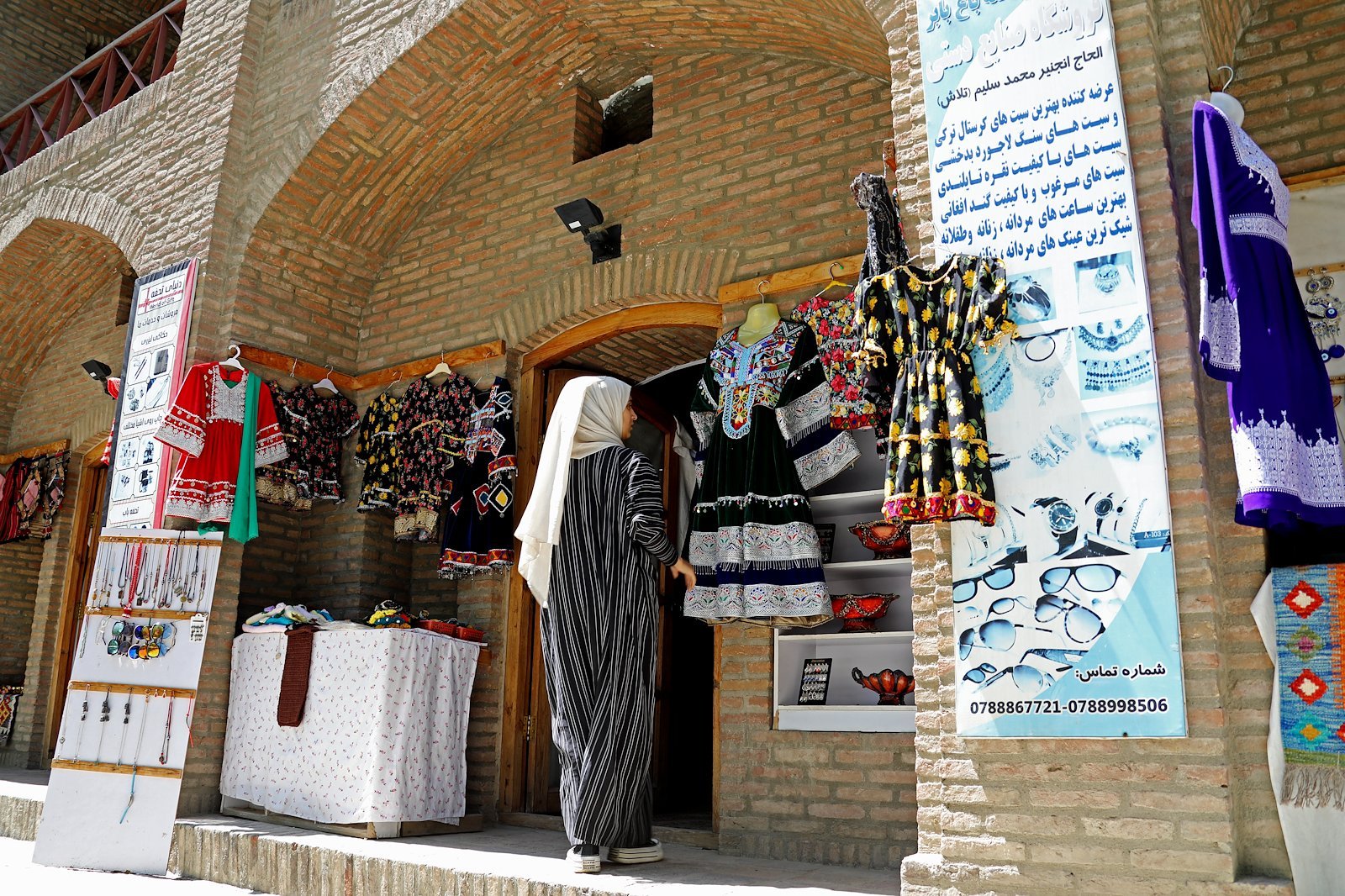
The number of small home-based businesses managed by women has increased from 600 to over 10,000 in the past four years. Economic experts say these businesses are the mainstay of family stability, with nearly 80% of women relying on them as their primary income source[2].
Although neighboring countries have provided minimal assistance to women entrepreneurs in the past four years, this sector has been supported by countries such as the United States, the European Union, India, Japan, Canada, the United Arab Emirates, and international organizations including UNDP, UN Women, and AKDN, creating nearly 400,000 jobs and indirectly benefiting more than 2.7 million women and girls.
Countries and Institutions Supporting Women Entrepreneurs
Despite the exclusion of women from educational institutions, government offices, NGOs, and a ban on their economic activities by the Taliban, most neighboring and regional countries have limited their support to official statements and paid little attention to solving their problems. Neighboring countries such as Iran, Pakistan, Central Asia, and China have not adequately supported Afghan women in the past four years, providing limited free education for girls and insufficient assistance in vocational training and entrepreneurship for women However, Tajikistan’s role in providing education opportunities, organizing seminars, vocational training and conferences in coordination with various international organizations supporting women’s roles in Afghanistan’s future system should not be overlooked[3].
Among these, some regional and far regional countries, especially India, Japan, the European Union, Canada, and the United States, have supported women’s rights and taken practical actions directly and through international organizations. India and Japan, as the largest supporters of women in vocational training, access to financial resources, and international exhibitions, have cooperated with hundreds of women entrepreneurs and businesswomen. Japan continues to provide support in the women’s livelihood sector, allocating 5.6 million dollars in 2025 to enhance the capacity of women entrepreneurs and provide about 2,100 women entrepreneurs with small loans and marketing support[4].
India’s cooperation, as an important regional country, has included education through government institutions such as ICCR and ITEC and NGOs like the Self-Employed Women’s Association (SEWA) between 2023 and 2025. Official reports indicate that India has provided over 50% of its commitments via about 500 scholarships to Afghan girls through online education in the 2023-24 academic year. Women entrepreneurs have also received technical training through short-term online programs in business management, marketing, handicrafts, textiles, and digital skills from NGOs and educational institutions in collaboration with international organizations, leading to increased income within a year after participation, demonstrating the effectiveness of skills development programs for women[5].
Access to financial resources remains one of the major challenges for women entrepreneurs in Afghanistan. India, through its NGOs and in cooperation with microfinance institutions and international organizations, has conducted several activities to facilitate access to finance. According to SEWA’s annual report, between 2023 and 2025, over 300 women entrepreneurs have accessed microloans ranging from 150 to 600 dollars through foreign microfinance institutions, including the European Union and international organizations, in sectors such as tailoring, agriculture, and food processing, contributing to about 40% growth in their businesses, highlighting the important role of microfinance institutions in business development[6].
Another crucial factor for the sustainability of women’s businesses is marketing and market recognition. The Indian government and its NGOs have played a significant role in facilitating Afghan women’s participation in exhibitions and trade fairs, especially the “Hunar Haat exhibition” in New Delhi, and easing customs procedures, opening new trade gateways for women entrepreneurs. Gulf countries such as Oman, Qatar, and the United Arab Emirates have recently provided opportunities for women entrepreneurs to participate in international exhibitions, resulting in a 50% increase in export orders after participation between 2024 and 2025[7].
In today’s world, technology plays a vital role in business growth. Indian NGOs and educational institutions, with the support of donor agencies, have launched programs to enhance the technological capacity of women entrepreneurs, enabling greater participation in e-commerce platforms and online marketing. Statistics show that about 1,200 women have upgraded their skills through online training programs away from Taliban oversight in the past three years, helping them expand their products’ markets internationally.
Despite financial support from donor countries from 2021 to 2025 and multilayered assistance empowering women entrepreneurs—with positive effects on individual income growth, new business establishment, and access to larger markets—many challenges remain. These include restrictions on travel without a male guardian for business transactions, lack of adequate technological infrastructure, limited access to formal financial resources, absence of product sales markets, discrimination, cultural attitudes, and security sensitivities. Neighboring countries can play a valuable role in increasing women’s income, sustainable economic empowerment, and preventing further economic stagnation by providing vocational training opportunities and creating markets for women entrepreneurs’ products in coordination with donor countries and implementing organizations.
References
[1] https://www.undp.org/afghanistan/stories/afghan-women-entrepreneurs-persevere-despite-restrictions
[2] https://www.undp.org/afghanistan/stories/afghan-women-entrepreneurs-persevere-despite-restrictions
[3] 1.https://www.undp.org/afghanistan/stories/afghan-women-entrepreneurs-persevere-despite-restrictions Phone interview with women entrepreneurs in Kabul and northern provinces
[4] https://www.undp.org/afghanistan/press-releases/japan-and-undp-partner-advance-womens-livelihoods-and-economic-opportunities-afghanistan
[5] Self-Employed Women’s Association (SEWA). (2022). Microfinance and women entrepreneurship in Afghanistan: Impact assessment report. Ahmedabad: SEWA Foundation.
[6] https://www.mea.gov.in/Images/CPV/140725MEAAnnualReport2024English.pdf?utm_source=openai
[7] Ministry of Commerce and Industry, India. (2023). Hunar Haat exhibition reports 2021–2023. New Delhi.
Join Lynne O’Donnell for 8AM’s podcast series, Insights.
Lynne talks with generals, diplomats, soldiers, journalists, politicians, activists, people who have front row seats for conflicts around the world, and citizens with a story to tell, happy or sad. For this first series, Afghanistan is the focus. Lynne and her guests talk about the collapse of the republic in August, 2021, and the impact since — for the people of Afghanistan, for the security of the region, for the safety of the world. It’s important, interesting and insightful.
Controlling the Narrative
Lynne O’Donnell talks with Mina Sharif, author, activist, women’s rights campaigner, educator and mentor. They discuss who controls the narrative and who speaks for Afghanistan’s people when the Taliban appear to have seized control not only of the country but of the message, too.
Have a listen
8AM Media, also known as Hasht-e-Subh Daily, stands as Afghanistan’s premier independent and non-profit newspaper, resonating as a beacon of journalistic integrity since its establishment in June 2007 by esteemed Afghan journalists and human rights advocates. With a steadfast commitment to citizen journalism and civic education, Hasht-e-Subh Daily has earned its place as the most esteemed publication in the nation.
Publisher: Sanjar Sohail
Email: [email protected]
Executive Director: Parwiz Kawa
Email: [email protected]
© 2023 – ©Hasht-e Subh Daily
© 2023 – ©Hasht-e Subh Daily